Recent Rescues
Meet six new sheep that became 29 new sheep
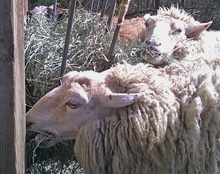 In December of 2017, we picked up six neglected sheep that we determined to be the most needy, from a flock of 22. We did not think we had enough room to take the entire flock of sheep, and had contacted many other farm animal rescue groups to see if one of them could step in.
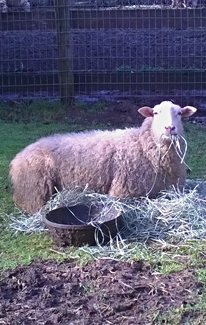 Our six ewes, crammed into our trusty 1971 VW bus, rode the ferry back to Vashon. The sheep were thrilled to have a grassy pasture and a three room stable. It took them awhile to figure out that they could actually get out of the rain, and that armfuls of luscious Eastern Washington Orchard Grass would be served twice a day, along with ample portions of sheep chow.
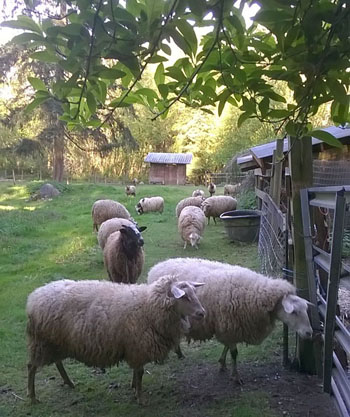 Three months later, five of these sheep delivered lambs, much to our surprise, and so six ewes became 13 moms and lambs. In the meantime, no other rescue groups had stepped up to help the sheep we had left with the original owner. And if our ewes had lambs, so must the EIGHT ewes left behind. Sure enough, there were eight new surviving lambs. Realizing that this problem would simply continue since the original owner was apparently unable or unwilling to separate out the rams, we agreed to take ALL remaining ewes and ALL lambs from the owner. With that, our 13 became 29 ewes and lambs. All the male lambs now at BaaHaus were neutered, and all the new sheep joined our three long-time sheep residents Ruby, Ivy, Henry and Blaze. WHEW!
Meet this little peeper!
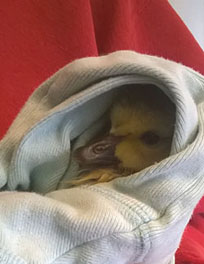 He/she is really a RECENT rescue, arriving at BaaHaus on May 1st of this year. A very kind and observant woman was keeping track of a goose nest near her beachfront house. All the eggs hatched out and the mom took the tiny goslings for a stroll and then a swim into Quartermaster Harbor. At some point, this little dude got separated, and the rest of his family bobbed away on the water.
The woman waited quite awhile but the mother did not return. So the rescuer scooped up the peeper, tucked him into a box on her coffee table and tracked down the BaaHaus phone number. We drove to her house, picked up the gosling who now resides in our downstairs bathroom.
Too soon to be positive that the tiny yellow blob will make it, but all signs look good. Thank you, good person on the Quartermaster beach!